Enjoying Life To The Full
Who hasn’t heard the phrase “Enjoying life to the full!”?
Although the Greek philosoper Epicurus is remembered as an hedonist insofar as he declared pleasure to be life’s sole intrinsic goal, the Epicurean ideal consists in simple living, with the absence of pain and fear, as the greatest pleasure. The most famous line in Voltaire's ''Candide'' echoes that wisdom:
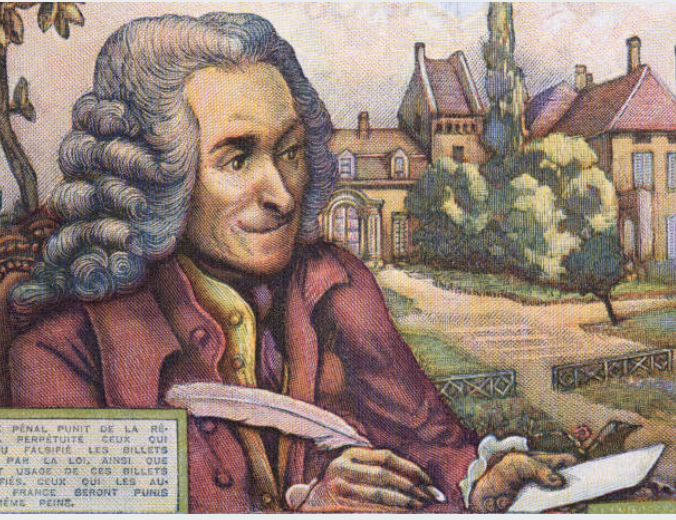
''We must cultivate our garden”. That is Candide's response to Pangloss, who tried again and again to prove that we live in the best of all possible worlds, no matter what disasters befall us. Instead of trying to change the world or worrying about the problems of others, you should focus on tending to your own life and finding joy in simple pleasures. If there was one central target that Volaire wanted satirically to destroy, it was the hope of his age that centered around science, love, technical progress and reason. In his view, of course science wasn’t going to improve the world; it would merely give new power to tyrants. Of course philosophy would not be able to explain away the problem of evil; it would only show up our vanity. Of course love was an illusion; power a chimera, humans irredeemably wicked, and the future absurd. Hope was a disease and it was Voltaire’s generous goal to try to cure us of it. His remedy wasn’t despair, but the quiet, grounded wisdom to cultivate our own garden instead.
Whatever the afterlife may hold, popular wisdom tells us we’re here to live life to the full. One night around a bonfire party a seventy two year old woman said, “All I care is to dance as long as I can. Tomorrow I may be paralyzed.” Eat, drink, and be merry, for tomorrow we die. It does matter to get things out of your system, until one day, before time runs out, it may matter to gratefully say, “STOP!” In an existence that is bound to end, enough is enough. Why not begin to explore, experience, dig deep into the greater mystery of what lies ahead? This, at least, is one reading of Voltaire’s “cultivating one’s garden”.
Heart attack, a gaping hole, too late… If you’re lucky, an extra couple of years may be granted to prepare for the possible aftermath. Take it! A religious man lay on his death bed, praying, “O Lord, why didn’t You give me forewarning of my dying?” The answer came, “I gave you old-age, I gave you disease and infarctus. What more forewarning did you expect?”
For the sake of argument there are two kinds of people. One wagers on making the best of life with good deeds, success, or merriment. Good or bad, their purpose is confined to this earthly, and occasionally to heavenly realms. ------------>>>>


"Men of small knowledge are very attached to the flowery words of the Vedas, which recommend various fruitive activities for elevation to higher planets, resultant good birth, power, and so forth. Being desirous of sense gratification and opulent life, they say that there is nothing more than this. In their minds the resolute determination of devotion to the Supreme does not take place." (Bhagavad-gita 2.42-43)
For the second kind, life’s very purpose is a preparation to the next. Whether from birth or in the wake of a life-changing event like serious illness or accident, they’re busy practicing, meditating, studying spiritual books, going on pilgrimage and attending retreats. These people are not necessarily religious, but they're spiritually-minded, which is perhaps what counts first and foremost.
A third kind of people have adopted a mixture of both kinds, so to speak. They give up the fruits of their work for God's pleasure, knowing this to yield the highest happiness. Incidentally, this is also a good way to endear yourself to others, not as a goal, but as a mere by-product of genuine kindness.
" Those who want to enjoy the fruits of their work are misers. A man engaged in devotional service rids himself of both good and bad actions even in this life. Therefore strive for yoga, O Arjuna, which is the art of all work. The wise take refuge in the Lord, and free themselves from the cycle of birth and death. In this way they attain that state beyond all miseries." (BG. 2.49-50-51)
From these excerpts it is clear that enjoying this life to the full is anybody's choice. It is no one’s monopoly. Those wagering on sense gratification will get just that reward. They may even get it in an afterlife in some heavenly realm where finer enjoyment is mixed with spirituality. Those wagering on selfless service, on the other hand, are said to get free from birth and death altogether, and reach the soul’s ultimate destination, where enjoying life to the full is said to be optimal.