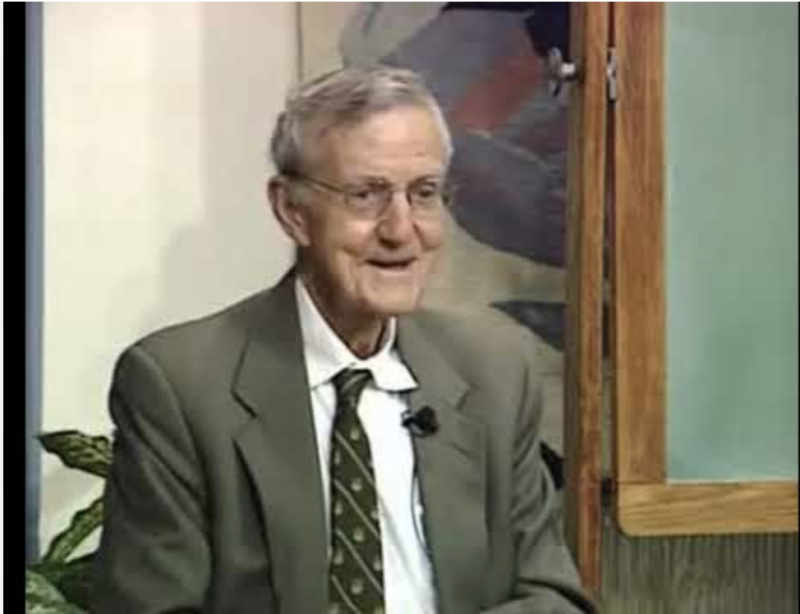
Ian Stevenson
(This article borrows many modified excerpts from Wikipedia)
Ian Stevenson (1918–2007) was a Canadian-born American psychiatrist, the founder and director of the Division of Perceptual Studies at the University of Virginia School of Medicine. He is best known for his research into evidence of reincarnation – the premise that emotions, memories, and even physical bodily features can be passed on from one life to another. Over his forty years of international research, he amassed three thousand cases of children who claimed to remember past lives. Stevenson was the author of around three hundred papers and fourteen books on reincarnation, including Twenty Cases Suggestive of Reincarnation (1966) Reincarnation and Biology, and its simplified version Where Reincarnation and Biology Intesect (both 1997), and European Cases of the Reincarnation Type (2003).
Stevenson was cautious in making claims about reincarnation. He emphasized that the information he collected was suggestive of reincarnation but was "not flawless and it certainly does not compel such a belief." He did, however, believe he had produced a body of evidence for reincarnation that should be taken seriously. His position was that reincarnation might possibly represent a third contributing factor, in addition to genetics and the environment, in the development of certain phobias, unusual abilities, and illnesses.
Stevenson acknowledged, however, the absence of evidence of a physical process by which a personality could survive death and transfer to another body, and he was careful not to commit himself fully to the position that reincarnation occurs. He argued only that his case studies could not, in his view, be explained by environment or heredity, and that "reincarnation is the best – even though not the only – explanation for the stronger cases we have investigated. (…) There is an impressive body of evidence and it is getting stronger all the time. I think a rational person, if he wants, can believe in reincarnation on the basis of evidence.
Early interest
Stevenson acknowledged the absence of evidence of a physical process by which a personality could survive death and transfer to another body, and he was careful not to commit himself fully to the position that reincarnation occurs. He argued only that his case studies could not, at this point in time, be explained by environment or heredity, and that "reincarnation is the best – even though not the only – explanation for the stronger cases we have investigated." Looking back on his work in 1974,, he said “There is an impressive body of evidence and it is getting stronger all the time. I think a rational person, if he wants, can believe in reincarnation on the basis of evidence.”
In 1958 and 1959, Stevenson contributed several articles and book reviews to Harper’s about parapsychology, including psychosomatic illness and extrasensory perception,when he submitted the winning entry to a competition organized by the American Society for Psychical Research, in honor of the philosopher William James. The prize was for the best essay on "paranormal mental phenomena and their relationship to the problem of survival of the human personality after bodily death." Stevenson's essay, "The Evidence for Survival from Claimed Memories of Former Incarnations" (1960), reviewed forty-four published cases of people, mostly children, who claimed to remember past lives.. According to Jim Tucker, Stevenson found twenty-five other cases in just four weeks in India and was able to publish his first book on the subject in 1966, Twenty Cases Suggestive of Reincarnation. The American physicist Chester Carlson, who invented Xerography, left $1,000,000 to the University of Virginia to continue Stevenson's work. The bequest caused controversy within the university because of the nature of the research, but the donation was accepted.
Case studies
The bequest from Chester Carlson allowed Stevenson to travel extensively, sometimes as much as 55,000 miles (89,000 kilometres) a year, collecting around three thousand case studies based on interviews with children from Africa to Alaska.[1]
In one case of claimed reincarnation, as Stevenson recounted it, a newborn girl in Sri Lanka screamed whenever she was carried near a bus or a bath. When she was old enough to talk, he said, she recounted a previous life as a girl of 8 or 9 who drowned after a bus knocked her into a flooded rice paddy; later investigation found the family of just such a dead girl living four or five kilometers away. The two families, Stevenson said, were believed to have had no contact. According to journalist Tom Shroder, "In interviewing witnesses and reviewing documents, Stevenson searched for alternate ways to account for the testimony: that the child came upon the information in some normal way, that the witnesses were engaged in fraud or self-delusion, that the correlations were the result of coincidence or misunderstanding. But in scores of cases, Stevenson concluded that no normal explanation sufficed."
In some cases, a child in a "past life" case may have birthmarks or birth defects that in some way correspond to physical features of the "previous person" whose life the child seems to remember. Stevenson examined two hundred cases of birth defects or birthmarks on children claiming past-life memories. These included children with malformed or missing fingers who said they recalled the lives of people who had lost fingers; a boy with birthmarks resembling entrance and exit wounds who said he recalled the life of someone who had been shot; and a child with a scar around her skull three centimetres wide who said she recalled the life of a man who had had skull surgery. In many of the cases, the witness testimony or autopsy reports appeared to support the existence of the injuries on the deceased's body.
The Journal of the American Medical Association referred to Stevenson's Cases of the Reincarnation Type (1975) as a "painstaking and unemotional" collection of cases that were "difficult to explain on any assumption other than reincarnation”.
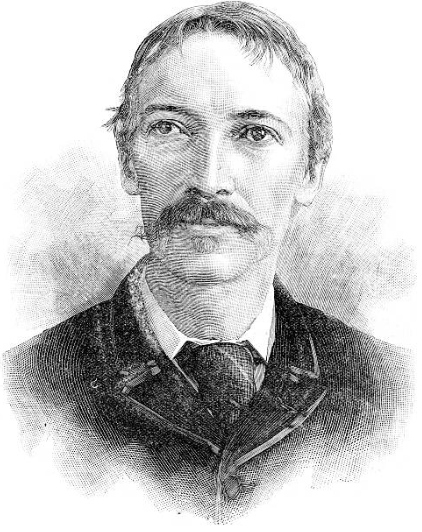
Ian Stevenson in young age

In September 1977, the Journal of Nervous and Mental Desease devoted most of one issue to Stevenson's research. The psychiatrist Haroid Lief described Stevenson as a methodical investigator and added, "Either he is making a colossal mistake, or he will be known as 'the Galileo of the 20th century'." The issue proved popular: the journal's editor, the psychiatrist Eugene Brody, said he had received 300–400 requests for reprints.
Criticism
Despite this early interest, most scientists ignored Stevenson's work. His detractors saw him as "earnest but ultimately misguided and wishful thinking, with a tendency to see science where others saw superstition.” In other words while Stevenson isn’t yet going down as the Galileo of the 20th century, has he made a colossal mistake in making a case for reincarnation?
The philosopher C.T.K Chari of Madras Chritian College, wrote that many of the cases had come from societies, such as that of India, where people believed in reincarnation, and that the stories were simply cultural artifacts. Responding to this cultural argument, Stevenson said that it was precisely those societies that listened to children's claims about past lives, which in Europe or North America would normally be dismissed without investigation. He presented forty cases he had examined in Europe..In July 1974 his colleague at the University of Virginia, J. G. Pratt, carried out a census of Stevenson's cases and found that of the 1339 cases then in Stevenson's file, the United States has the most, with 324 cases, and that Great Britain had reported 111 cases. Hence many critics acknowledged that Stevenson had brought “a new professionalism to a hitherto crank-prone field”. Even his biggest critic Paul Edwards wrote that Stevenson “has written more fully and more intelligibly in defense of reincarnation than anybody else”, and admitted, “I have the highest regard for Stevenson’s honesty.” Carl Sagan referred to Stevenson's investigations as an example of carefully collected empirical data, and though he rejected reincarnation, he wrote that the phenomenon of alleged past-life memories should be further researched.
Remi J. Cadoret, wrote in The American Journal of Psychiatry that Stevenson's European Cases of the Reincarnation Type "provides an introduction to an exciting range of unusual phenomena and furnishes an inspiring example of a painstaking protocol to sift facts from fancy." Lester S. King, pathologist, wrote for the JAMA Journal, "Stevenson may not convince skeptics, but he has placed on record a large amount of data that cannot be ignored."
Stevenson stepped down as director of the Division of Perceptual Studies in 2002, although he continued to work as research professor of psychiatry. Bruce Greyson, editor of the Journal of nera-death studies, became director of the division. Jim Tucker, the department's associate professor of psychiatry and neurobehavioral sciences, continued Stevenson's research with children, examined in Tucker's book, Life Before Life, A Scientific investigation of Children’s memories of previous Lives (2005).