
& Destiny
In Hinduism and Buddhism karma is the sum of a person's actions in this and previous states of existence, viewed as deciding their fate in future. For the past fifty years the concept has become widely used in various countries. Karma (from the sanskrit “kar”, कर्म) refers to an action, work, or deed, and its consequences from previous lives ---or from the current life. According to Vedanta, the most influential school of Hindu theology, the effects of karma are controlled by God. Karma isn't revenge; it's balance. What you give, you'll receive, in one way or another.
To understand karmic astrology, you need to know three types of karma:
- Sanchita Karma. This is the total accumulated karma from all past lives.
- Prarabdha Karma. The portion of karma you experience in this lifetime.
- Kriyamana Karma. The karma you create through your current actions.
Karma is the universal law of cause and effect. Every thought, word, and action creates an energy that returns to us—sooner or later. It's not about punishment, it's about balance.
According to Webster's dictionary, loosely speaking “karma” is a synonym of ‘fate’ or ‘destiny”, which can be either positive or negative. We also inherit the collective karma of the family and nation we belong, which continues through the generations.
There are ways to attract Good Karma:
- Loving and forgiving yourself. Most people, at one time or another, find themselves battling low self-esteem, self-blame and self-doubt.
- Love and forgive others. Holding grudges holds you back.
- Practice kindness and compassion.
Karmic relationships
They are connections that fall into a pattern. It's a cycle where you argue, you make up, you get passionate again, until the next intense argument. So, it's high highs and low lows, which is never really good for anyone.
Karma doesn't hit instantly, but when it does, it shows no mercy ---the pain you gave someone else hits back harder. Karma isn't loud, but it is accurate. It watches silently while people lie, manipulate, betray, and walk around acting like their actions have no consequences.
……..
"Instant karma's gonna hit you
Gonna hit your back off your feet
Better recognize your brothers
Every one you meet.
Well, we all shine on
Like the moon and the stars and the sun".
(excerpt from John Lennon’s song “Instant Karma”)
The principle of "An eye for an eye, tooth for tooth" ties us to the strict Law of Karma. Punch someone in the face, instant karma is what you face.
Forgiveness is probably the surest way to counteract karma. That can be expressed by being kind to the person who’s wronged or harmed you, regardless of whether they’ve expressed any regret toward you. Reversely, sincere appologies to someone you’ve wronged are nice, but nicer still is making amends and rectifying the dammage done.







John Lennon



Man is the architect of his own destiny
In English, ‘fate’ usually implies an adverse outcome, whereas ‘destiny’ suggests a great or noble course or end, i.e. the country's destiny is to be a model of liberty to the world. We find the closest equivalent of karma in the expression ‘man is the architect of his own destiny'. A knife is used to spread butter on a slice of bread, but it can also murder someone. Both knife and karma are neutral ---you alone deserve the reactions you've once produced. A farmer reaps the crop he’s sown, a compulsive debtor accumulates debts. In Jean de La Fontaine’s fable the hardworking ant asks the destitute cicada:
'Tell me how you spent the summer?'
Was what she asked the borrower.
'Night and day, to every comer,
I sang, so please you ma'am.'
'You sang? I'm delighted.
Now off you go and dance!'


Next column


Why Reincarnation?
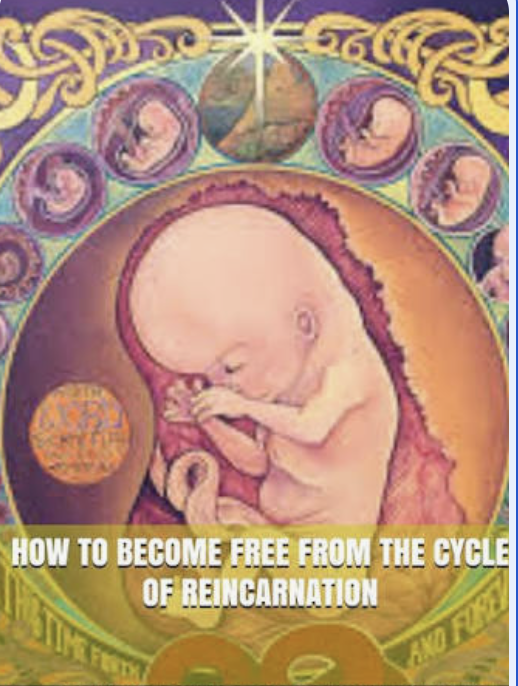
Let’s suppose a debtor dies before returning the loan you've given him. Does he get off scot free? Not so, under karmic law --- you’ll meet again after rebirth. And it works both ways: should you wish to set yourself free from recovering your dues, best is to set your debtor free before he dies. “Please keep that loan as my free gift to you, you owe me nothing.” This is the winner-winner move that set both lender and borrower karma-free.
Unresolved issues must find closure. This is the very purpose of reincarnation. And as we commonly carry a fair amount of sorting out to do in our current relationships, karma insures a corresponding amount of lives to either fix them, or improve them. Ultimately, the law is there to serve the evolution of souls in a way that holds their free will as sacred above all. Whether you see it as punishment or purgatory, there is no question of damnation, no doom and gloom here. Reincarnation is, broadly speaking, a type of hell for it carries immense suffering. It is also perpetual unless you do the needful to end it. And unlike hell, reincarnation can contain immense pleasure and happiness. We all know the phrase 'C’est la vie!' ---sometimes high, sometimes low. The following is an assessment of karma found in the ultimate reference on karma and rebirth ---the Bhagavad-gita:
The alternate appearance and disappearance of happiness and distress are like that of winter and summer seasons. One must learn to tolerate them without being disturbed. One who is not affected by happiness and distress, and remains steady in both, becomes eligible for liberation. Bg. 2.14-15
From the highest planet in the material world down to the lowest, all are places of misery wherein repeated birth and death take place. But one who attains to My eternal abode never takes birth again. Bg. 8.16
In Christiandom, the closest thing to karma is purgatory. Yet the concept is relatively recent and has been the subject of controversy for centuries. Catholics see it as a certain time and space in the afterlife where impure souls must get purged of sin before they can ascend to God. According to karma this conception is correct in principle. Yet very few Chritians have envisaged purgatory via rebirth in a physical body. Why? It is claimed that reincarnation isn’t mentioned in the Bible. According to a number of theologians, however, in the fourth century Roman emperor Constantin removed all references to reincarnation from the Old and New Testaments. It was believed that if people thought they got a second or third life it might weaken their religious fervor (and perhaps also the establishment's controle over the populace. Hence, purgatory has remained a nebulous notion throughout Christiandom, many churches refusing to even teach it to their followers.
Karma Yoga
This is the path by which one is to get free from karma. Physical action being impossible in the afterlife, physical incarnation is the time and place to act ('kar'). Karma yoga designates any duty that elevates the soul through selfless service.
“O Arjuna, You have a right to perform your duties but are not entitled to the fruits of your actions.” BG 2.47. “Work done as a service to God has to be performed; otherwise it binds one to this material world. Therefore, perform your prescribed duties for His satisfaction, and you will always remain free from bondage.” Bg.3.9
This is perhaps the most quoted teaching on karma in all of spiritual literature. And for good reason. In a couple of verses, Krishna dismantles our common understanding of action. Though non-violence is generally encouraged, in cases of conflict, it shouldn’t become an excuse for inaction. Arjuna wanted to walk away from battle, as many of us want to walk away from life's difficulties. Hard as it sounds the only object you’re expected to walk away from are the fruits of action ---personal gain or victory. A self-realized man has no purpose to fulfill in the discharge of his duties. Selfish desires are described as the all-devouring enemy of wisdom, which “burn like fire and are never satisfied.” They typically interfere with the roles and responsibilities we are called to fulfill. While attachment to results are common causes of stress and frustration, aloofness from success or failure in our endeavors alone is the guarantor of inner-peace.
Detachment from results doesn’t mean indifference. It means greater focus on performance, greater attention to excellence. Give it your best, giving the outcome up to Divine will, to whom it rightfully belongs. The pleasure of accomplishment is what rightfully belongs to you.