

THE SOUL
Some will find this artcle technical and dry. And for good reasons. If you're a lover of juicy emotion, consider skipping this read altogether. With a little patience, however, the juicy part comes at the end.
Hindu traditions consider each individual soul to be as eternal. Souls are not created at birth like in Christianity. They journey through repeated births and deaths until they attain their ultimate Source. By contrast, Buddhists posit the cycle of reincarnation as the souls' journey until they disintergrate into absolute Vacuity. Nirvana is not mere emptiness, it is not nothingness. It marks the disappearence of self-identity, which is the cause of our endless suffering in the cycle of rebirths. Hence some have equated the souls' disintegration as a sort of "spiritual suicide".
To counter this view, a colorful metaphore has been used that compares Buddhist Enlightenment to the state of someone who, after hitting themselves hard on the head repeatedly, simply stops hitting. They experience relief from pain. But relief is not bliss. And what is the question of bliss anyway when no soul is left to experience it? The sanskrit "Nir" means "no", or "absence of"; and "vana" means "forest", because all varieties disappear.in Nirvana.
The closest Hindu equivalent to the Buddhist Vacuity is Absolute Fullness, the opposite of Vacuity. Both conceptions reject the individual selves and insist that all things in existence are essentially one with the whole.
One major Buddhist tradition focuses on attaining a final rebirth in what it calls "Pure Land" after death. A deserving soul may be reborn there for further training on the way to liberation from cyclical rebirth (saṃsāra). The adept can meet a Buddha face to face and study under him without the distractions and fears of earthly life. Pure Land is the only Buddhist tradition believing in a spiritual world, although it is not clear whether this paradise is eternal or just a stepping stone to Niravana.
Both Hindu and Buddhist teachings refer to empowered souls known as Devas. They have paired female consorts, the Devis, who are equally worshipped for their various powers. Devic lifespan is extremely long but they are not eternal beings, nor are their realms. Female Deities in Buddhism are widely revered across various traditions for their compassion, wisdom, and protective powers. They are often associated with Mother Earth, fertility, wisdom, and spiritual liberation.
Finally, it must be noted that Buddhists do not worship a monotheistic Creator Deity. Hence, their faith has sometimes been described as non-materialisic atheism.
On the Hindu side, the prominent Advaita Védanta school is closest to Buddhism as it also advocates the loss of spiritual individuality once the soul has reached liberation from rebirth.
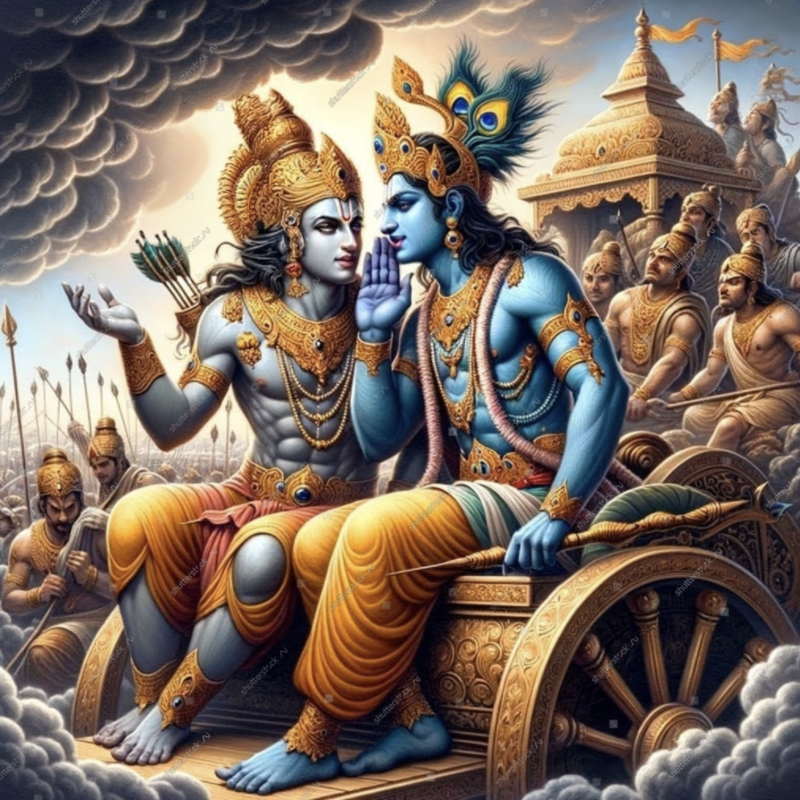
In contrast to the above two impersonal groups there are the Vaishnavas, equally prominent in Hinuism. For them, souls never merge into God entirely; because their ultimate destination is loving devotion of the Supreme Lord (and Lady).
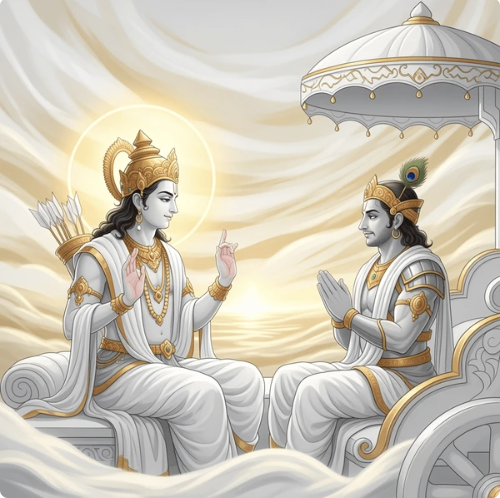
“After many births and deaths, one who is actually in knowledge surrenders unto Me, knowing Me to be the cause of all causes and all that is. Such a great soul is very rare.” Bhagavad-gita 7.19
Very rare too --- and which matters more than knowledge--- is Love of God:
"And of all yogīs, one who renders transcendental loving service to Me is the most intimately united with Me, and is the highest of all." BG 6.47