
Ayurvedic physician taking pulse, Delhi, c. 1825

The gunas
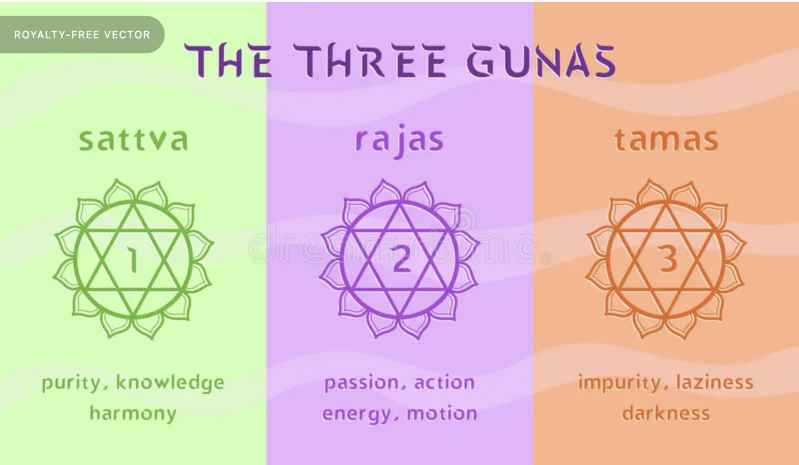
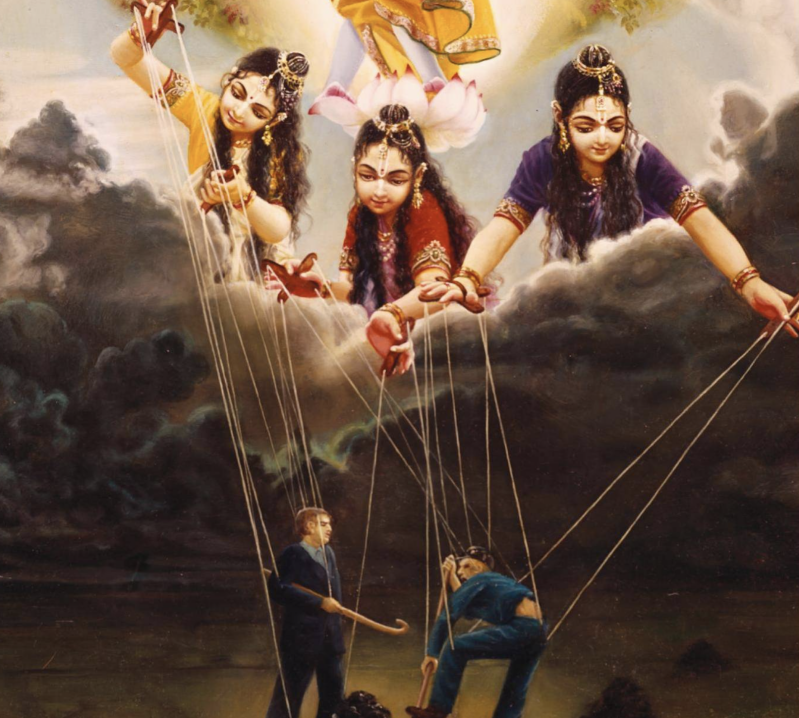
The three gunas (Sanskrit for strands or qualities) are energetic forces that weave together to form the universe and everything in it. There are three gunas, each with its own unique attributes: Sattva (goodness), Rajas (passion), and Tamas (ignorance). They can also be seen as consiousnes, activity, and passivity, or stability. Chapter 14 of Bhagavad Gita is entitled The Trigunas
The Gunas come in cycles, you naturally experiences them according to your lifestyle. A healthy lifestyle helps increase Sattva, which in turn balances rajas and Tamas. Animals never overwork, overeat, or over indulge in sex, because they have no freedom. Unlike them, we can overeat and get sick. We can over-indulge in activities and get restless, which is what causes an imbalance in the Gunas that affect the quality of our lives.
The Gunas can be balanced through spiritual practices, a healthy lifestyle and by following a Sattvic diet. Regardless of your religion the purpose of all spiritual practice is to increase the Sattva level in us so we can transcend the three gunas altogether. Unlike Sattva, Rajas is what leads us to suffering, and Tamas to delusion. Hence the importance of putting time aside for spiritual practice. Below are some practices that boost your Sattva:
- Yoga is a great way to settle down restlessness in the body and mind. About 15 to 20 minutes of yoga daily can help calm the nervous system.
- Breathing exercises are an ancient technique specifically meant to increase the oxygen flow in the body. The more oxygen you intake, the more energized you will feel.
- Fasting is an age-old technique which has been prescribed over decades. This is because fasting is the best way to detoxify the body and raise the Sattva. It would be great to incorporate fasting every now and then in your life, even just one day a week, or eat only certain specific foods that are high in Sattva.
- Meditation is one of the best ways to increase Sattva. The more you meditate, the deeper is your meditation and the more Sattva you have.
All the basic lifestyle tips that our grandmas taught us are actually of great value. “Early to bed, early to rise, makes a man healthy, wealthy and wise”. “Don’t lose your health to get wealth, or you'll lose that same wealth to get your health back”. “Eat breakfast like a king, lunch like a prince and dinner like a pauper”.
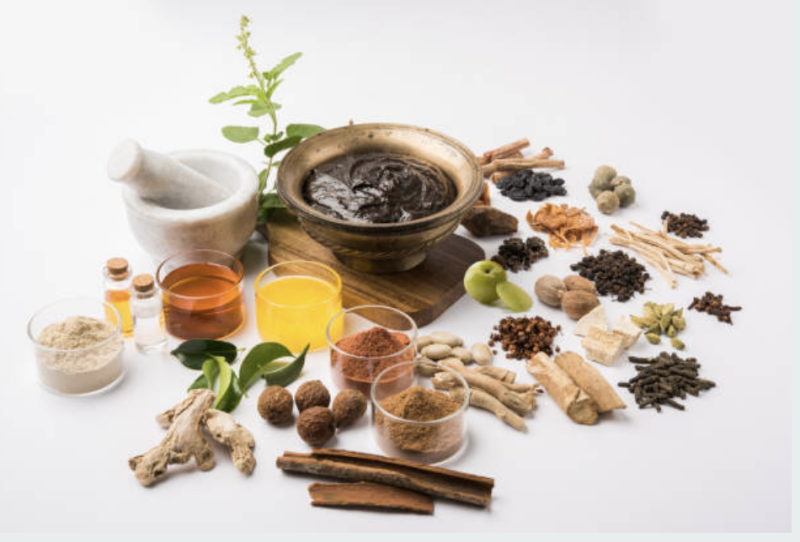
A Sattvic diet is one that consists of fresh fruits, vegetables, whole grains, nuts, seeds,, fresh milk, and sweet spices --- turmeric, cinnamon, cardamom, ginger, mint, holy basil, etc. Sattvic food items are generally easy to digest and they do not bring any heaviness or dullness in the body. Food having excess sugar, fat, or spices are Rajasic. Non-vegetarian food with too much onion and garlic are Tamasic. Last but not least, eat only as much as required so that food to insure full digestion. Freshness and measured quantity insure high sttvic levels in your body.
Ultimately Sattva itself is subjet to caution ---the happiness it yealds can lead to pride; that daunting feeling of being “holier than thou”. Goodness and virtues are not in themselves spiritual qualities; An entire chapter of the Bhagavad-gita is dedicated to the three gunas, advising us to: "Rise above these modes, be transcendental to all of them. Be free from all dualities and from all anxieties for gain and safety, and be established in the Self." (BG 2.45)
Click here for: The 3 Gunas (full chapter)
Ayurveda
Ayurveda is an alternative medicine widely practised throughout India and Nepal, where as much as 80% of the population report using the treatments, which have also been adapted for Western consumption. Public institutions offer formal study in the form of a Bachelor of Ayurvedic Medicine and surgery degree (BAMS). The legal standing of practitioners is not equivalent to that of conventional medicine and it is unrecognised in most countries. Several scholars have described the contemporary Indian application of Ayurvedic practice as having a more "spiritualised" emphasis to practice found in variants in the West. One of the most popular aproaches is panchakarma, which eliminates toxic elements from the body with five processes aiming at restoring balance of the three gunas by purgation.
Ayurvedic practitioners regard the body, the mind and the personality as three separate elements of the whole person, each element influencing the others. Massage treatments using oils and fomentation are frequently used.
§§§§§
Signs of Sattva in a person:
- Calm and serene behavior
- Self-control and contentment
- Love for truth, knowledge, and spiritual pursuits
- Compassion for all beings
- Detachment from material outcomes
- Healthy body and mind
- Joy in service and simplicity
-
Signs of Rajas in a person:
- Restlessness and impatience
- Strong desires and cravings
- Attachment to results and success
- Competitive mindset
- High ambition and achievement-oriented
- Oscillating between joy and sorrow
- Tendency to overwork or burnout
- Signs of Tamas in a person:
- Lethargy, depression, and excessive sleep
- Addictions or overindulgence
- Neglect of duties and responsibilities
- Ignorance and refusal to learn
- Fear, confusion, and victim mindset
- Escapism and procrastination
- Tendency to blame others