NDEs
We’ve all heard about people who’ve had a near-death experience. They’ve become known as NDE experiencers.
Dr Raymond Moody is the “father” of the modern day NDE movement; his pioneering study Life After Life revolutionized the way we think about death and what lies beyond. Originally published in 1975, it is the groundbreaking study of one hundred people who experienced “clinical death” and were revived. In their own words, they tell what lies at the threshold of death.
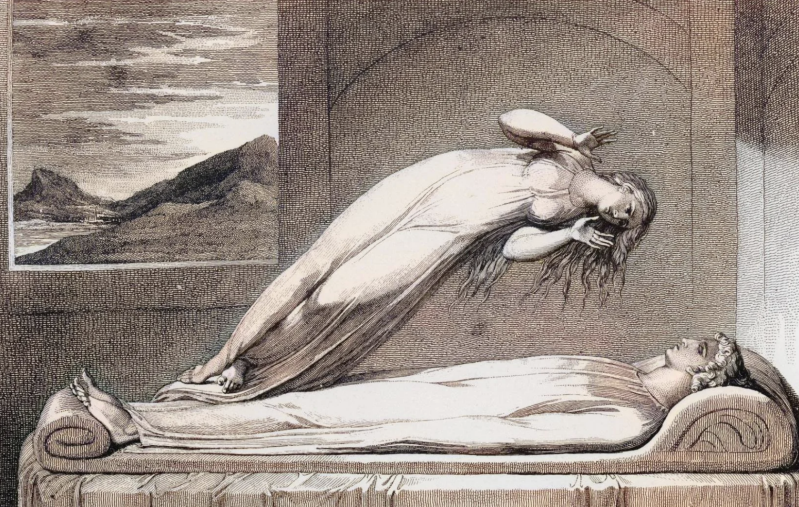
Nowadays on social media, there are thousands of sincere testimonies from people who suffered a heart attack, or from severely wounded victims of accidents who found themselves observing their mangled bodies from above the scene of accident, or from the ceiling of the operating block. During surgery ---or a period of deep coma--- they found themselves feeling more alive than they'd ever been, and able to describe in detail the various phases of surgery around the operating table where their own bodies were declared clinically dead. Never mind that their heartbeat had shown a flat line on the electrocardiogram for several minutes, the patients had remained keenly conscious until they were somehow resuscitated.
In some reports experiencers were given the choice, by someone they perceived as a deceased relative or by a being of light, either to resume their earthly life, or to soar further into death. Despite a strong attraction to soar up, many chose to continue their incarnation for the sake of a needy spouse or dependant children to look after. For those choosing “the afterlife now”, what happens past the threshold of death remains a mystery.
A life review is part of the experience of NDE, during which a person sees their life flash before their eyes for but a few seconds (although it may seem much longer---or indeed in a completely different time frame--- to some. This alone often changes in profound ways how people view and live the rest of their lives. In his seminal book AFTER, Dr Bruce Greyson, another well known researcher in NDE cases, describes the life review as a "rapid revival of memories that sometimes spans the person's entire life, with a panoramic quality to it". Commentators note that a life review doesn’t just show experiencers how their past actions have affected other people, but also what such people have felt after what was said or done to them.
No wonder people are somewhat shaken by the experience. The purpose of a life review isn't hard to view as that of bringing one to the awareness that our words and actions have much greater impact on the world around us than we think. If you're one of "the lucky ones" (?) who come back, the lesson can include a greater care and consideration with how you will treat others henceforward. As for those who do not come back into their bodies, possible consequences of one's life conduct might have to be faced in the afterlife.
A great benefit of NDEs can be seen in its bringing meaning into human existence. With death ceasing to be the mere end of it all, human freewill must be reviewed in a new context ---the accountability that comes with it from birth. What goes around comes around, for isn't man the architect of his own destiny? As family, moral, or professional responsibility, are there today, what's more logical than a karmic responsibility being there like the old exam at the end of school? If it is, death isn't the greatest tragedy in life. Living without having a purpose, without discovering one's destiny is certainly more tragic.
The issue of God comes to mind. Many experiencers report being faced with a bright light, or a being of light. Christians identify the light as Jesus or as God Himself. The being of light puts a question, from "Are you ready to die?", to "How do you feel about the way you've lived?". Another common statement ---which by the way comes not with spoken words but telepathically--- is "Your time hasn't come yet, you must return into your body to complete your life mission (or your unfinished business)".
TO BE CONTINUED SHORTLY