Prana & Pranic Nourishment
Prāna
Prāna (प्राण) is a Sanskrit term that simultaneously integrates the notions of breath and the vital principle of respiration.
Various conceptual approaches have proliferated since the composition of the Upanishads and the Yoga of Patanjali, which continue to inspire yoga buffs. Prana is a nuanced concept, far from the Western approach that is quick to compartmentalize, oppose, and analyze everything.
According to the Upanishads, prāna is a universal energy that living beings absorb through the air they breathe. Yoga uses a technique for controlling that prana called Prāṇāyāma. Its literal translation is "directed movement towards (āyāma) the vital breath (prāṇa)." This breath circulates through the nadis (subtle channels located within the physical body, invisible to the naked eye and undetectable with various instruments) and can be felt as sometimes burning, sometimes cooling, generating a wide range of sensations and emotions. Nadi Shodhana —literally "purification of the channels"—has earned a reputation as an essential technique for anyone wishing to calm the mind. It is often called "alternate-nostril breathing" because it involves passing air through each nostril in turn.
According to Ayurveda, there are five vital airs circulating in the body are called vayus, meaning winds:
- prana, the prototype of the other winds, associated with ingestion and perception,
- apana, the descending wind associated with exhalation, excretion, and reproduction,
- udana, the ascending wind, associated with inhalation, balance, and expression,
- samana, the equalizing wind, associated with digestion and metabolism,
- vyana, the diffusing wind, associated with circulation and the muscles.
In Chinese and Japanese contexts, the terms qi, chi, or ki, refer to the same universal substance. It is said to be the origin of all forms of energy and to manifest through specific frequencies on the different planes of existence.
Breatharians
At its core, breatharianism is the belief that humans can live without food, and in some cases, without water. Adherents propose that sustenance can be drawn directly from prana, chi, or ki (cosmic energy). This idea challenges our fundamental understanding of biology, suggesting that physical nourishment is not the only way to sustain the body.
Instead of relying on calories and nutrients from food, breatharians manage to nourish themselves through practices like meditation and conscious breathing, absorbing vital energy from their surroundings. This concept is not new; it has roots that stretch back centuries across various cultures and spiritual traditions.
Ancient Roots
The idea of living without food appeared in numerous ancient texts, particularly within Eastern spiritual traditions like Hinduism and Jainism. Stories of sages, yogis, and mystics who survived for years without eating were common in religious folklore. These accounts often described individuals who have achieved such a high level of spiritual development that they have transcended the need for physical sustenance. In these traditions, the ability to live on prana was seen as a siddhi, or a spiritual power, acquired through stringent discipline. It was presented not as a diet, but as a by-product of spiritual enlightenment.
Modern Movements
In recent decades, breatharianism has seen a resurgence, finding a place in contemporary New Age and alternative health movements. Modern proponents often frame the practice as a path to ultimate detoxification and spiritual awakening. They blend ancient mystical ideas with modern wellness language, attracting followers who are seeking alternative paths to health. These movements often spread their message through books, workshops, and online communities. They present breatharianism as a lifestyle choice that has made the ancient concept of inedia accessible to a global audience, moving it from the secluded caves of hermits into the mainstream of alternative spirituality.
These days hundreds of videos feature breatharians on the Internet, separately from videos on fasting. The difference between the two must indeed be known. Fasting consists in the abstinence of feeding, usually for a few days, up to a month. Past a couple of weeks fasting is considered dangerous. Not that the body fails to compensate the lack of food ---it does so naturally to insure survival, and there are recorded case of individuals fasting fo up to sixty days or more. After three days of fasting the liver starts drawing energy from stored fat and impurities in the body, transforming them into ketone bodies to insure minimum supply of nourishment to the heart and brain. Once all body fat has been used up, the liver draws into muscle tissue, which is where health benefits are compromized and danger begins.
The breatharian protocole is quite different. A first week of dry fasting is recommended, which means no eating or drinking water. Two weeks of hydric fasting follow, at the end of which the great majority of pranic candidates conclude their 21-day experiment by eating again gradually, then normally. A small minority of predisposed individuals may go on abstaining from solid food altogether. But unlike in fasting, where nourishment is found in body fat and body wastes, these rare persons have developed the ability to access all the nourishment the body needs for optimal health directly from the environment. Baffling is it may sound, you can find dozens videos featuring individuals who’ve switched from a normal lifestyle to Breatharianism. Some have lived “normally” without solid food for months and years at a time, others are still doing indefinitely.
Patrice Roy is a French male nurse we’ve interviewed personally, who’d stopped eating for over two years continuously. His close friend, a medical physician who worked at the same hospital as he, could not believe that Patrice was telling him the truth. He had him go through a series of health exams and found that not only Patrice’s check-ups were normal, they were optimal. This did not stop him, however, from questioning Patrice's sanity and inviting him to restaurants. Patrice politely sat with his doctor friend and ordered a herb-tea for the sake of its taste, which he said is the only thing he “missed” from time to time.
Another French Breatharian, Jean-François Lemercier, wrote on Breatharian World (PWF), “I used to be pranic. I know 10 people in France who are still doing it. They are not catholic saints like it used to be in France several centuries ago. They are more into ecology, New Age, or druidism.”
(Part 2 is on top of the colomn on the right)

Ageless sage, Devaraha Baba in Vrindavan
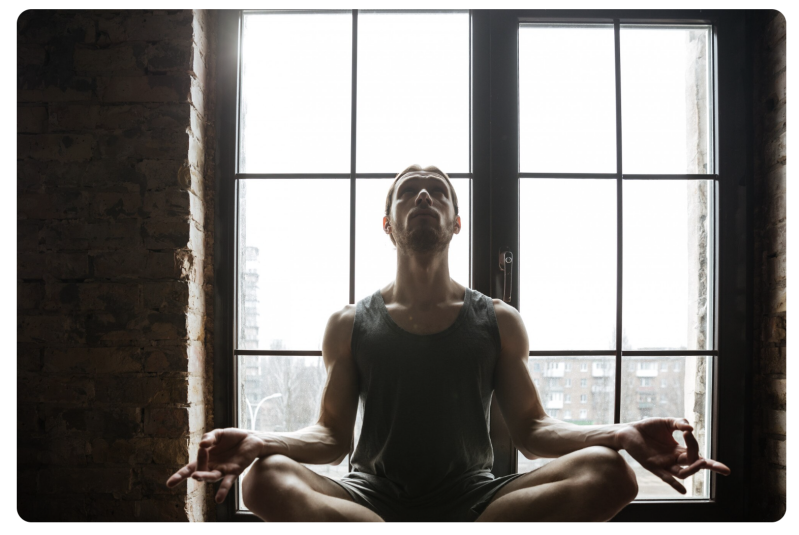
Pranic Breath Retention in Paranayama

Alternate-nostril breathing in Parnayama
2. Famous breatharians
Prahlad Jani was an Indian breatharian monk who claimed to have lived without food and water since 1940 (40 years, until his demise in 2020). Two observational studies and one imaging study of Jani have been conducted ---one in 2003 and one in 2010 --- both involving Sudhir Shah, a neurologist at the Sterling Hospital in Ahmedabad, India, who had studied people claiming to have exceptional abilities, including other famous Breatharians, like Hira Ratan Manek. In both cases the investigators confirmed Jani's ability to survive healthily without food and water during the testing periods, although neither study was submitted to a scientific journal. When questioned six days into the 2010 experiment, the DRDO spokesperson announced that the study's findings would be "confidential" until results were established. Uninvolved doctors and other critics have questioned the validity of the studies on the strength of the argument that no one can survive for days without food and water, what to speak of surviving for years, especially since glucose, a substrate critical to brain function, is not provided.
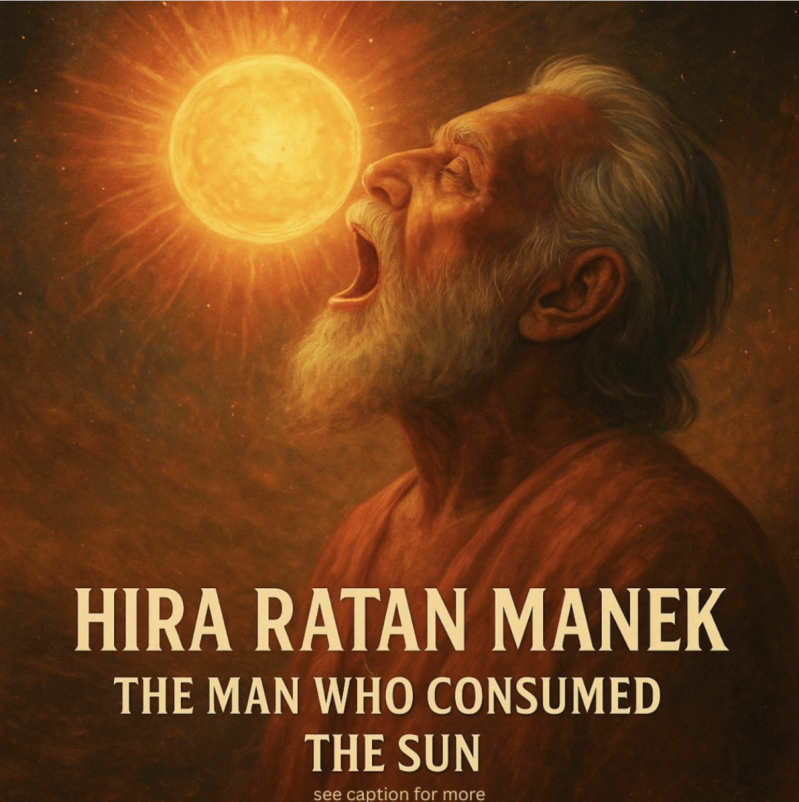
Hira Ratan Manek
Hira Ratan Manek (1937–2022) claimed that since 18 June 1995, he lived on water and occasionally tea, coffee, and buttermilk. Manek stated that sungazing was the key to his health, citing yogis, ancient Egyptians, Aztecs, Maya and Native American practitioners of the art. Medical experts confirmed his ability to draw sustenance by gazing at the Sun. The method consists in fixing the sun disk directly at sunrise or sunset, only when it is safe for the eyes to do so. Sunlight allows a good amount of prana into one’s body within a short few minutes. According to Ayurveda, sunlight is one of the main sources of prana, and practitioners demonstrate that it is possible to survive on sunlight alone.
Jasmuheen
Jasmuheen (born Ellen Greve) was the first global advocate of breatharianism in the 1990s. She said, "I can go for months and months without having anything at all other than a cup of tea. My body runs on a different kind of nourishment." In 1999, she volunteered to be monitored closely by an Australian television program for one week without eating. After Jasmuheen had fasted for four days, conplaining that the room was too dark and confined, Berris Wink, president of the Queensland branch of the Autralian Medical Association, urged her to stop the test, which prooved anything but conclusive.
Nevertheless, Jasmuheen is credited for getting the ball of breatharianism rolling across the world with her seminal book Living On Light, where she formulated a 21-day protocole that became widely followed by pranic beginners.
Ray Maor
In a television documentary produced by the Israeli television investigative show InThe Real Face (פנים אמיתיות), hosted by Amnon Levy, Israeli practitioner of inedia, Ray Maor managed to survive without food or water for eight days and eight nights. According to the documentary, he was restricted to a small villa and placed under constant video surveillance, with medical supervision that included daily blood testing. The documentary claimed Maor was in good spirits throughout the experiment; that he lost 7.5 kilograms (17 lb) after eight days; that blood tests showed no change before, during or after the experiment; and that cardiologist Ilan Kitsis from Tel Aviv Sourasky Medical Center was "baffled"
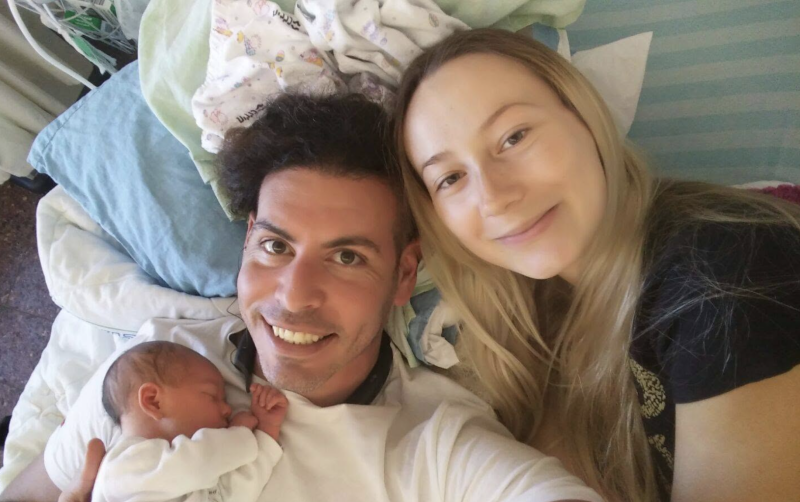
Pranic Celebrity Ray Maor, and his familty
In Hinduism
Some Vedic texts contain accounts of hermits practising what used to be called inedia, or sustenance through Light. Valmiki's Ramayana provides an account of holy men who lived on the waves of air and moonlight. Paramahansa Yogananda’s famous 1946 "Autobiography of a Yogi" details two historical examples of breatharianism, Hari Giri Bala and the Christian mystic Theresa Neuman.
Devalaha Baba was a famous sage of last century who lived in a tree on the bank of the Yamuna in Vrindavan. Notable personlities often visited him from New Delhi, including Indira Gandhi and the first president of India Dr. Rajendra Prashad, who made a shocking statement around 1950: “Devraha Baba was already at least 150 years old when I visited him”. He was known as “Ageless Baba”.
Once is not a habit and I’m now going to use “I” (the author of this website) in the following few lines. As I happened to be living in Vrindavan around 1988, I can vouch to seeing Devaraha Baba in his tree when he was still alive. This would bring his age to at least 185 years at the time. Hard as it is to believe, many claimed he was much older. But wait for the punchline ---Devaraha Baba was known as an authentic pranic sage. How long did he live without solid food is anyone’s guess, but it could far excede the longest time ever recorded.